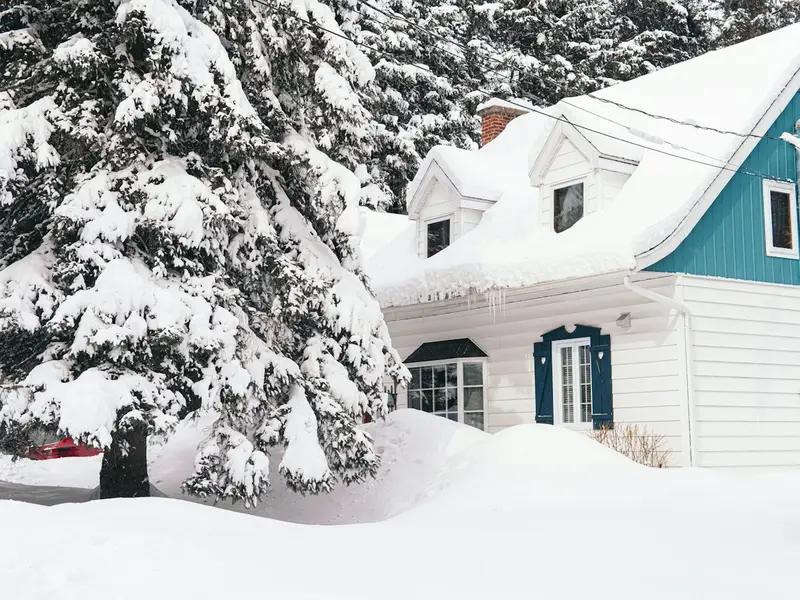
Front Range winters are unpredictable. A sunny 50-degree afternoon can turn into a single-digit night, and an arctic front can sit over Englewood for days. Pipes don't freeze because it's winter. They freeze because a few specific spots in the house get cold enough, long enough.
Which pipes freeze first
Sink lines on outside walls
Kitchen and bathroom sinks against an exterior wall are the number one trouble spot.
Garage and crawl space pipes
Any pipe in an unheated space is at risk, especially near an attached garage.
Outdoor spigots
A hose left connected traps water in the spigot and the pipe behind it.
Basement corners
Pipes near a basement window, rim joist or foundation vent can freeze in a bad cold snap.
Before winter: a 30-minute checklist
- Disconnect garden hoses and close the inside shut-off valve for each outdoor spigot, then open the spigot outside to drain it
- Add foam pipe insulation to exposed pipes in the garage, crawl space and unfinished basement
- Seal gaps where cold air gets in near pipes: rim joists, dryer vents and cable holes
- Find your main water shut-off and make sure it turns. Tag it so anyone in the house can find it fast
On a cold night
- Keep the thermostat at the same temperature day and night
- Open cabinet doors under sinks on outside walls so warm air reaches the pipes
- Let a faucet on an outside wall drip slowly. Moving water is much harder to freeze
- Keep the garage door closed
Before you travel in winter
A pipe that bursts while nobody's home can run for days. Before a winter trip, set the heat to 55°F or higher, and consider shutting off the main water valve and opening a faucet to drain the lines. Ask a neighbor to check the house if a cold front comes through. Our post on coming home to a burst pipe covers what to check when you get back.
If a pipe freezes but hasn't burst
- Open the faucet on that line so melting water has somewhere to go
- Warm the pipe gently with a hair dryer, heating pad or space heater kept at a safe distance
- Start near the faucet and work toward the frozen section
- Never use a torch or open flame
If the pipe is already split, thawing it restarts the leak. Keep the main valve handy, and see our frozen pipe water damage page for what happens next.
Quick answers
At what temperature do pipes freeze?
Pipes in unheated spaces can start to freeze when it's below about 20°F outside for several hours. Pipes in outside walls and garages are the first to go.
Should I drip every faucet?
No. Drip the faucets on outside walls or on lines that have frozen before. One slow drip on those lines is usually enough.
Related help
Frozen Pipe Water Damage
Pipes that split in a cold snap, cleaned up and dried before the damage spreads.
GuideWhat to do when a pipe bursts
The first steps, in order.