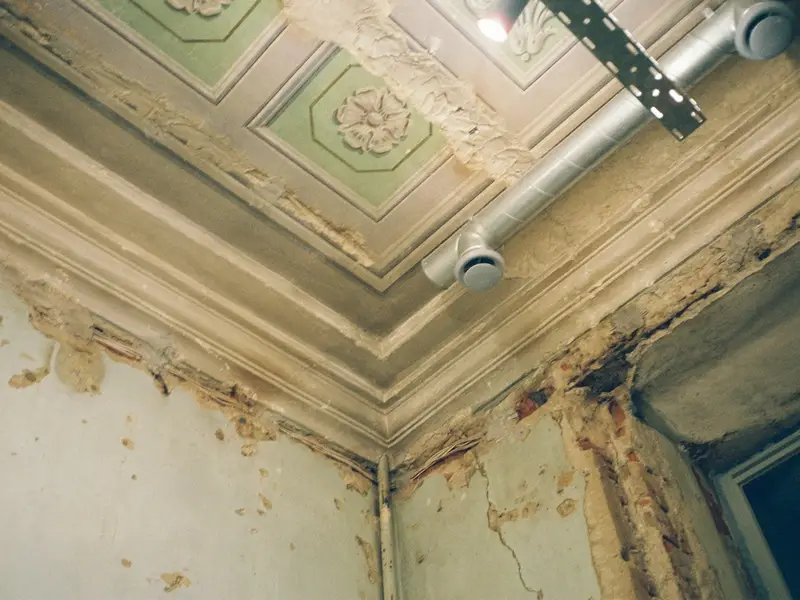
Colorado's dry air helps a lot of things dry quickly, so it's easy to assume water damage here will take care of itself. On the surface, it often looks that way. But inside a wall, under carpet pad or above a ceiling, the air doesn't move, and that trapped moisture is where mold starts.
The 24 to 48 hour window
Mold spores are in every home. Give them moisture and something to feed on, like the paper face of drywall or the wood in framing, and they can start growing in about 24 to 48 hours. That's why drying should start the same day a pipe bursts, not after the weekend.
Where mold hides after a burst pipe
Inside wall cavities
The back of the drywall and the insulation stay wet long after the paint looks dry.
Under carpet pad
The pad holds water against the subfloor where you can't see it.
Above ceilings
Water that drops through a floor sits on top of the ceiling drywall below.
Behind cabinets
Cabinet bases and the wall behind them stay damp in a dark, closed space.
Signs mold may already be starting
- A musty or earthy smell in one room or closet
- Dark spots or staining low on walls or baseboards
- Paint that bubbles or peels where the water was
- Allergy-like symptoms that get better when you leave the house
How proper drying prevents it
Fans alone dry the surface and push damp air around. Preventing mold means getting the moisture out of the materials themselves: extraction, then dehumidifiers and air movers, with readings every day until the wood and drywall are back to normal. Where water is trapped in a wall or ceiling, the cavity is opened or vented so it can dry. See extraction and drying.
Don't close it up too early
The most common way mold starts after a burst pipe is a wall or floor that gets closed up while it's still wet inside. Wait for readings, not appearances. Our page on burst pipes inside walls explains how we check.
Quick answers
Will bleach kill mold after a leak?
Bleach can lighten surface stains on hard surfaces, but it doesn't fix the moisture that caused the mold, and it doesn't reach inside drywall. Drying is what stops mold.
Does Colorado's dry air prevent mold?
It helps surfaces dry, but closed spaces like wall cavities and under flooring stay humid. Mold can still grow there.
Related help
Water Extraction & Drying
Pumping, extraction and drying with daily moisture checks until the readings are right.
ServiceBurst Pipe in a Wall
Hidden water inside walls found with meters, then dried with the smallest openings.