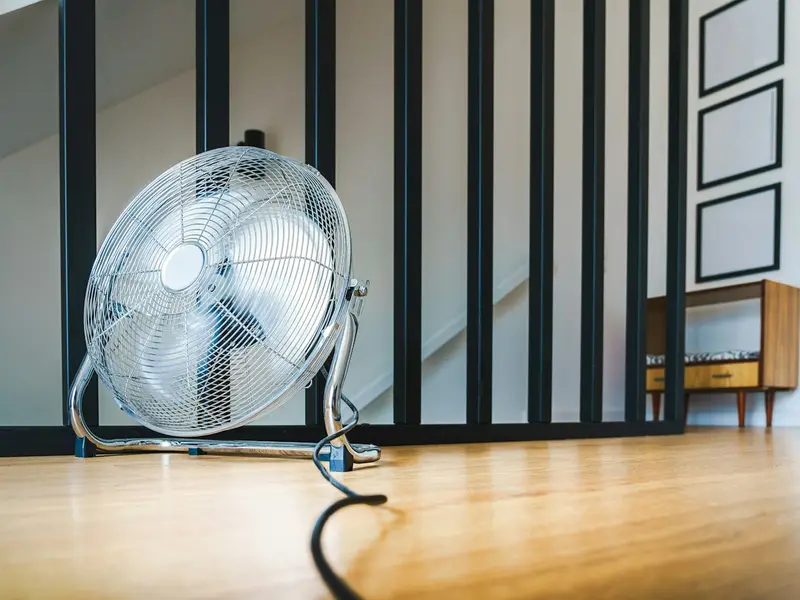
After a burst pipe, people usually ask the same thing: "Can't I just mop it up and run a fan?" For a small puddle on tile, sometimes. But when water has run under flooring or up into drywall, the part you can't see is what causes the damage later. Professional drying is about getting that hidden water out, and proving it's gone.
Step 1: Water extraction
We start by removing as much liquid water as possible, because pulling it out is far faster than evaporating it.
- Pumps for deep standing water, like a flooded basement
- Extractors for carpet and pad, which pull water out instead of pushing it around
- Hardwood and tile get surface extraction, then drying from above and sometimes below
Step 2: Structural drying
Once the standing water is out, the job becomes drying the materials themselves: drywall, wood framing, subfloor and concrete.
Air movers
They push air across wet surfaces so moisture evaporates faster. They're aimed low along walls where the water wicked up.
Dehumidifiers
They pull that evaporated moisture out of the air, so it doesn't just soak back into the walls and furniture.
Cavity drying
For walls and ceilings, air is pushed inside the cavity through small holes, so it dries from the inside out.
Containment
Plastic walls keep the dry air where it's needed and speed up drying in bigger rooms.
Step 3: Daily moisture readings
We don't guess when a room is dry. Every visit, we take readings in the same spots and compare them to a dry part of your home. You'll see the numbers drop day by day, and they go into your insurance file.
How long drying takes
Most rooms are dry in about three to five days. Things that add time:
- Hardwood floors and thick subfloors
- Basements, which stay cool and humid
- Water that sat for a day or more before drying started
- Closed wall and ceiling cavities
What you can do during drying
- Keep the equipment running, even overnight. Turning it off sets the drying back
- Keep windows closed unless we say otherwise, so the dehumidifiers can work
- Keep the heat on normally. A warm house dries faster
- Let us know if you notice a new stain or smell somewhere else
Water extraction and drying across Englewood
We bring extraction and drying equipment to homes in every Englewood ZIP code, 80110 to 80113, and nearby Sheridan, Cherry Hills Village, Greenwood Village and north Littleton. Colorado air is dry most of the year, which helps, but a wet basement or wall cavity still needs dehumidifiers to dry properly.
If you need burst pipe water removal in Englewood today, call and tell us how long the water ran. That tells us what equipment to bring.
Areas we cover: Englewood 80110, Englewood 80111, Englewood 80112, Englewood 80113, plus Downtown Englewood, Cushing Park, Belleview Park and Arapahoe Acres.
Extraction and drying questions
How long does water extraction take?
Removing the standing water usually takes a few hours on the first visit. Drying the materials afterward takes about three to five days.
Is the drying equipment loud?
Air movers and dehumidifiers do make steady noise, like a strong fan. Most people get used to it, and it's only there for a few days.
Do I need to leave my house during drying?
Usually not. Most families stay home. If the water wasn't clean or a large area is opened up, we'll talk about it.
How do you know when it's dry?
We compare moisture readings in the wet areas to a dry area of the same material in your home. When they match, it's dry and the equipment can go.